

You launch a campaign.
You invest in ads.
You create content.
And then… Nothing meaningful happens.
You might see impressions. Maybe a few clicks. Sometimes even leads. But the results never justify the time, effort, or budget.
Here’s the uncomfortable truth:
Most digital marketing campaigns don’t fail because of budget or tools-they fail because there’s no system behind them.
So instead of asking:
👉 “Which platform works best?”
Ask this instead:
👉 “Why do most digital marketing campaigns fail?”
What Is the Real Reason Digital Marketing Campaigns Fail?
Digital marketing campaigns fail primarily due to lack of a clear strategy, poor audience targeting, weak funnel structure, and no ongoing optimization. Without a structured system connecting all efforts, even good tactics fail to deliver consistent results.
The Real Problem: It’s Not the Algorithm
When campaigns underperform, brands blame external factors:
“The algorithm changed”
“Our ads didn’t reach enough people”
“Competition is too strong”
These are easy explanations—but rarely the truth.
The real issue is this: Most businesses run disconnected marketing activities instead of a structured system.
Without a system, even the best tactics fail.
Reason 1: No Clear Digital Marketing Strategy
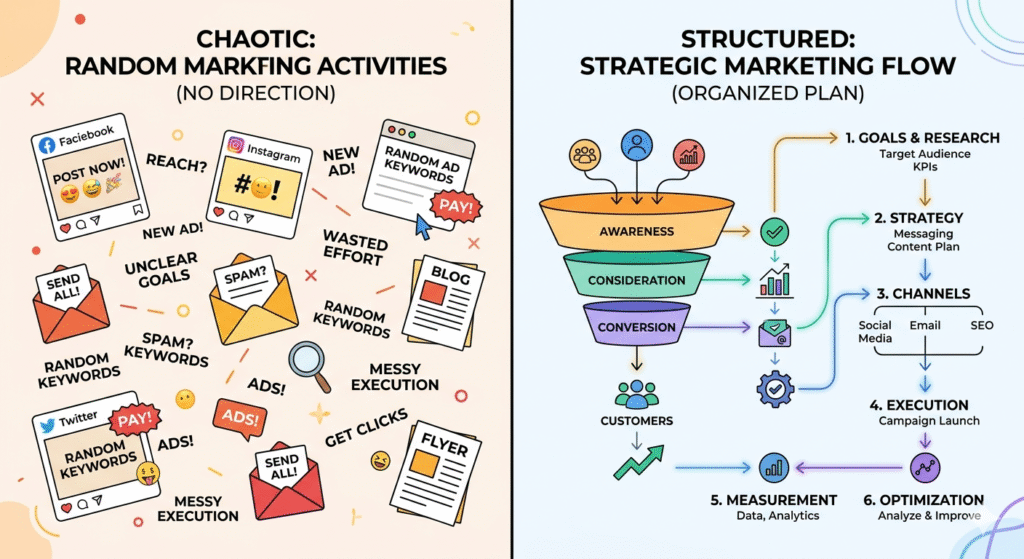
Many campaigns fail before they even start because there’s no clear direction.
Common mistakes:
- Random content posting
- Undefined or overly broad target audience
- Inconsistent messaging
This creates confusion—for both your team and your audience.
How to fix it:
- Define your Ideal Customer Profile (ICP)
- Build a consistent brand message
- Choose platforms based on audience behavior
Clarity in strategy leads to focus in execution.
Reason 2: Focusing on Vanity Metrics Instead of ROI
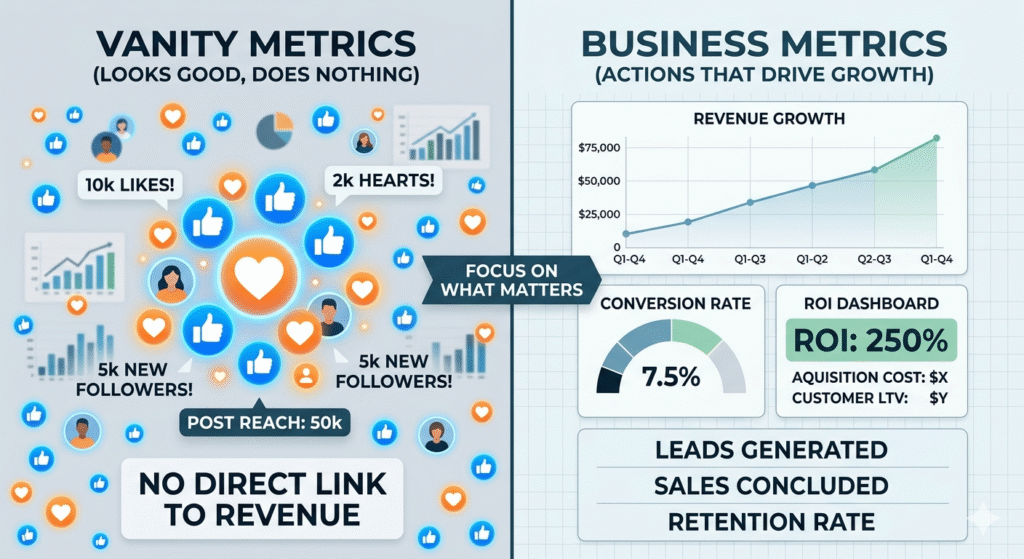
Not all metrics matter.
Vanity metrics:
- Likes
- Followers
- Impressions
They look good—but don’t drive revenue.
What actually matters:
- Cost Per Lead (CPL)
- Conversion Rate
- Customer Acquisition Cost (CAC)
- Return on Investment (ROI)
If your marketing isn’t driving business results, it isn’t working.
Reason 3: Weak or Non-Existent Marketing Funnel
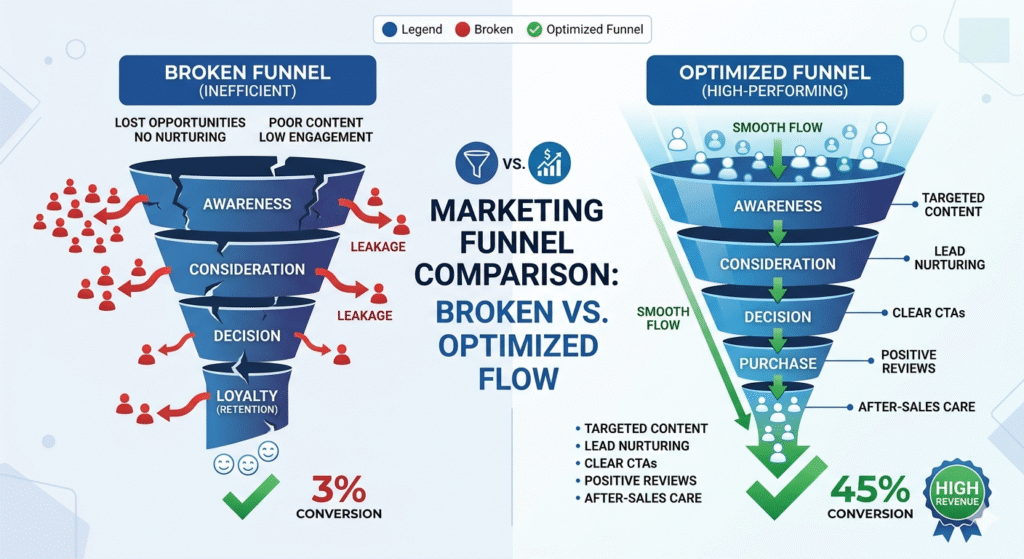
Many brands expect instant conversions.
They send cold audiences directly to sales pages—and hope for results.
That’s not how buying works.
The 3-stage funnel:
- Awareness
- Consideration
- Decision
Skipping these stages breaks trust.
How to fix it:
- Create content for each stage
- Use targeted landing pages
- Retarget interested users
A strong funnel turns attention into revenue.
Reason 4: Poor Ad Creative and Messaging

Even with a good strategy, weak messaging kills performance.
Common issues:
- Generic ads
- No clear value proposition
- Repetitive content
How to fix it:
- Start with a strong hook
- Highlight a clear benefit
- Speak to a specific audience segment
Great marketing isn’t louder—it’s more relevant.
Reason 5: No Testing or Optimization
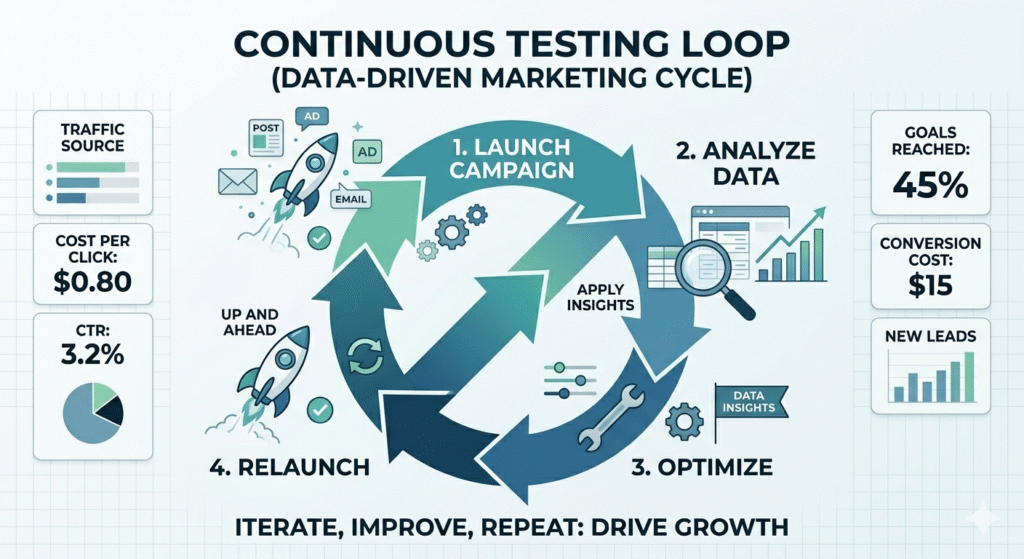
Many brands treat campaigns as one-time efforts.
They launch once and either:
- Let it run blindly
- Or stop too early
That’s a mistake.
How to fix it:
- Run A/B tests on ads and creatives
- Track performance regularly
- Optimize based on data
Winning campaigns are built through iteration—not assumptions.
Reason 6: Disconnected Marketing Channels
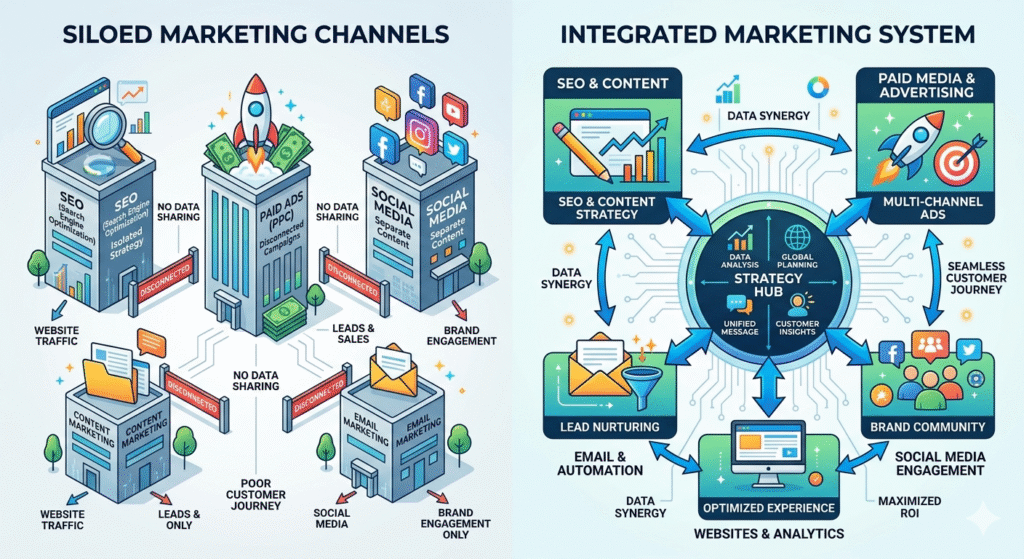
When channels don’t work together, performance drops.
Common issue:
- SEO, paid ads, and social media operate in silos
Result:
- Inconsistent messaging
- Broken customer journey
How to fix it:
- Align messaging across platforms
- Share insights across channels
- Build an integrated strategy
Consistency builds trust. Trust drives conversions.
How to Fix Digital Marketing Campaigns: A Simple System
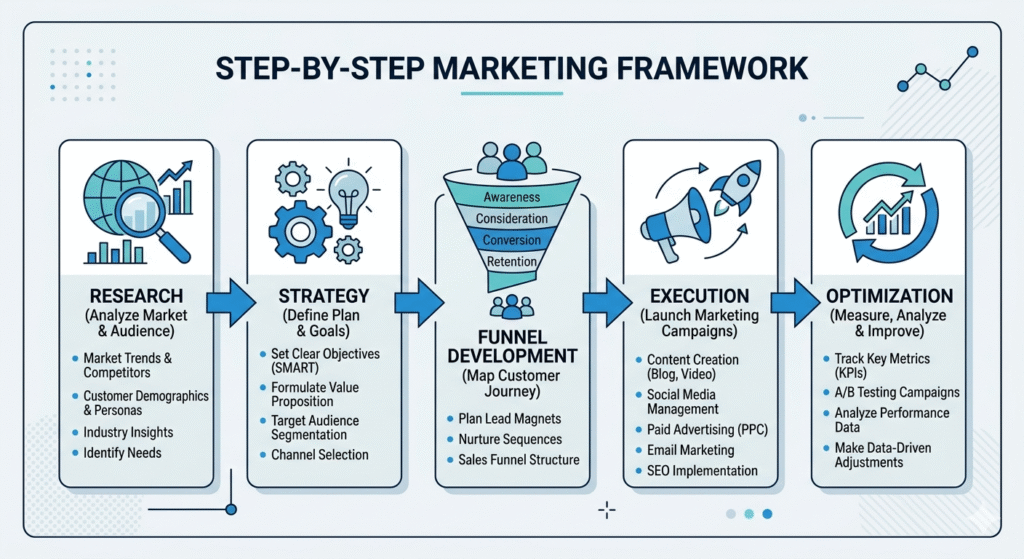
Instead of fixing isolated issues, build a system.
The 5-step framework:
- Audience research and market analysis
- Strategy and positioning
- Funnel creation
- Multi-channel execution
- Continuous testing and optimization
A system ensures every effort contributes to growth.
Mini Case Example: From Poor Results to Scalable Growth
A brand was running ads with:
- High ad spend
- Low conversions
- No funnel
After implementing a system:
- Defined a clear audience
- Built a structured funnel
- Improved creatives
- Started testing regularly
Results:
- Lower cost per lead
- Higher conversion rates
- Better ROI
The difference wasn’t the platform-it was the system.
FAQs
Why do most digital marketing campaigns fail?
Most marketing campaigns fail due to lack of strategy, poor targeting, weak funnels, and no optimization. Without a structured approach, marketing efforts remain inconsistent and ineffective.
What is the biggest mistake in digital marketing?
The biggest mistake is focusing on tactics instead of strategy. Running ads or posting content without a clear plan leads to poor results.
How can I improve my digital marketing performance?
Improve performance by defining your audience, building a funnel, tracking meaningful metrics, and continuously testing and optimizing campaigns.
What is a marketing funnel and why is it important?
A marketing funnel represents the customer journey from awareness to purchase. It helps guide users step-by-step, increasing conversions and improving ROI.
How long does it take for digital marketing to work?
Results depend on strategy and execution, but most campaigns need consistent optimization over weeks or months to deliver scalable results.
Conclusion: Campaigns Don’t Fail Randomly
Marketing failures are predictable.
They come from:
- Lack of clarity
- Weak structure
- Inconsistent execution
Successful brands don’t just spend more-they operate smarter with systems.
If your campaigns aren’t working, the answer isn’t more activity.
It’s a better strategy.
If your campaigns are underperforming, running more ads won’t fix the problem.
What you need is a structured marketing system.
👉 Want to identify what’s not working?
Get a complete digital marketing audit and uncover the gaps in your strategy, funnel, and execution.